Historical Summary
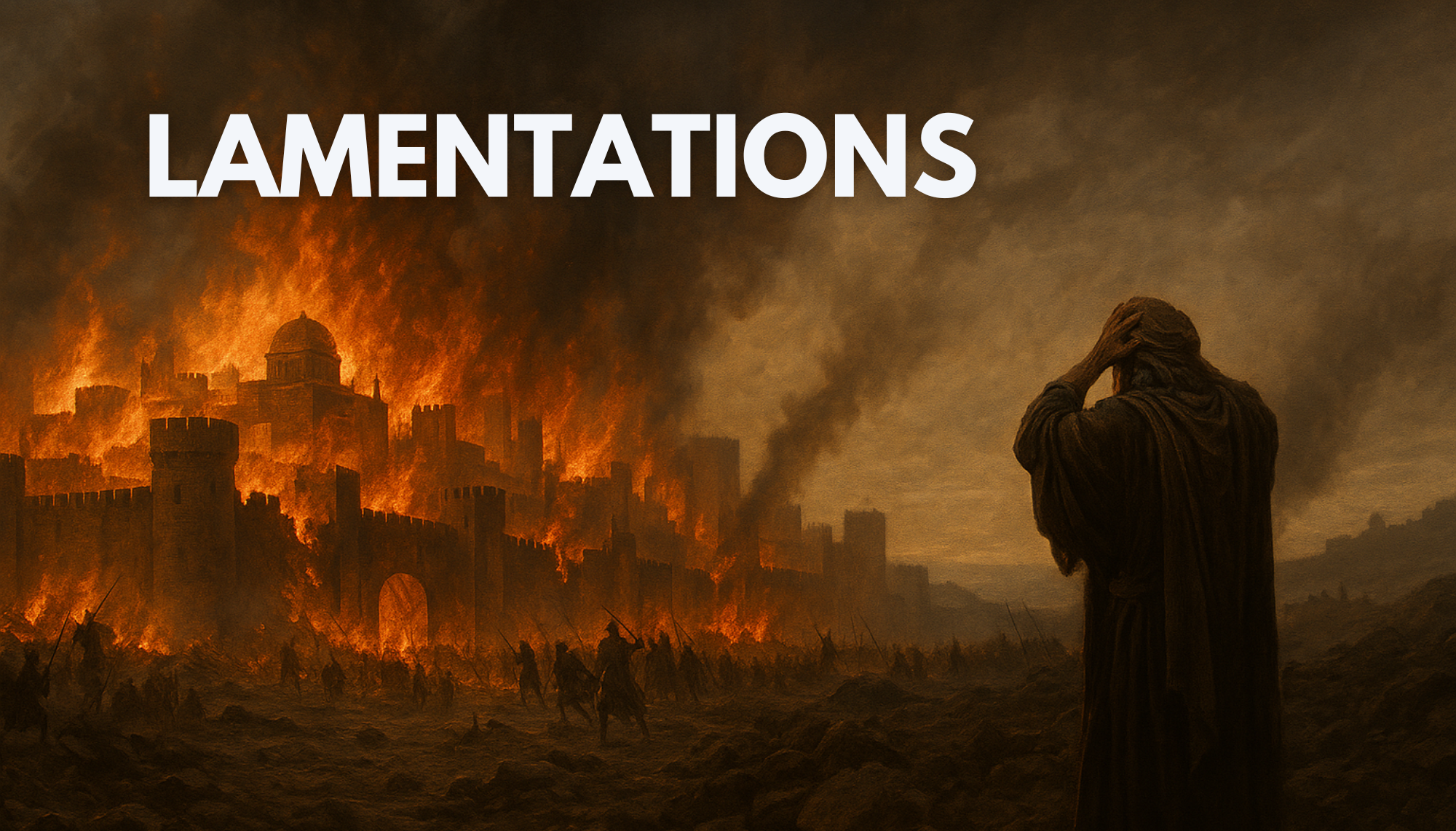
With its five chapters, the book of Lamentations is a poetic response to the destruction of Jerusalem by Babylon in 586 B.C. The temple was burned, the city dismantled, and the people scattered into exile. Traditionally attributed to Jeremiah, the book captures the shock and grief of a prophet watching his nation collapse. Unlike the historical accounts in Kings or the warnings recorded in Jeremiah, Lamentations expresses the tragedy through funeral poetry, portraying Jerusalem as a fallen queen sitting alone in ruin. Yet even as it mourns a specific moment in history, the book suggests that this disaster is rooted in something deeper than the fall of a single city.
The book consists of five carefully structured poems, most arranged as Hebrew acrostics, imposing order on overwhelming sorrow. Each chapter approaches the catastrophe from a different angle—loneliness, God’s anger, personal suffering, lost glory, and a final prayer for restoration. Yet, the book affirms God’s mercy and faithfulness, preventing the lament from becoming despair. Preserved in Israel’s worship and memory, Lamentations records a judgment that functions as a pattern, suggesting the fall of Jerusalem mirrors a catastrophe more ancient than the event itself.
Chapter
Lamentations 1 (complete chapter) “How is She Become as a Widow?” (upon request)
Lamentations 2 (complete chapter) “How Hath the Lord Covered the Daughter of Zion With a Cloud in His Anger” (upon request)
Lamentations 3 (complete chapter) “It is of the Lord’s Mercies That We Are Not Consumed.” (upon request)
Lamentations 4 (complete chapter) “Under His Shadow We Shall Live Among the Heathen.”
Lamentations 5 (complete chapter) “Turn Thou Us Unto Thee, O Lord.”